
Why Genesis Matters to the New Testament

Genesis: Myth or History?
When was the last time you read Genesis? Why is it so important? Genesis cannot simply be myth or symbolism because without it, the New Testament, and especially the Gospel, loses the foundation on which it stands. Without the Fall there would be no need for Jesus' sacrifice. Without a broken world there would be no need for a healed relationship with God.
Why Genesis matters to the New Testament is because the New Testament answers the brokenness found in Genesis. We discover a Savior who reconciles the world to His Father. We find a relationship with God restored. In Revelation we see the entire world and heaven itself healed and brought back to perfection. The sin and death that began in Genesis are finally and completely defeated. Everything that was broken in Genesis begins to be restored through Christ and reaches its completion in Revelation.
If sin never entered the world through a real historical fall, what exactly did Christ come to reverse? The gospel is God's answer to a real catastrophe that began when sin entered God's good creation. Let's look at some of the direct references to Genesis we find in the New Testament. How did Jesus and the apostles understand Genesis?
Jesus Treated Genesis as History
Jesus approached the stories in Genesis as a record of God's acts. Jesus Himself lays the foundation for marriage in Matthew 19:4-6 and Mark 10:6-9. In these explanations He references Adam and Eve. If Adam and Eve were just symbolic there would be no historical foundation for two people becoming one flesh. This union is symbolic of our union with Christ.
Jesus also viewed the children of Adam and Eve as real individuals. He spoke of their son Abel as the first righteous martyr (Matthew 23:35, Luke 11:51). Abel was one of two people specifically named when Jesus scolded the Scribes and the Pharisees for killing the wise and the prophets who had been sent to them in times past. The Scribes and Pharisees stood in the long line of those who had rejected God's messengers.
Jesus also referred to the Flood, who so many today believe was only a local event or simply never happened at all. When Jesus describes His second coming He compares it to the Flood. The near end of humanity during this time is compared to the destruction of the enemies of Jesus in the future. Jesus teaches that the way people responded to Noah's warnings will be similar to the way people will ignore the signs of His impending return (Matthew 24:37-39, Luke 17:26-27).
In Luke 17:28-32 Jesus compares Lot fleeing the destruction of Sodom and Gomora to the coming judgment of the world. He uses past events once again to reveal the future. This judgment is culminated in the book of Revelation when the world is judged for their sin. These parallels continue in the writings of Paul.
Paul Explained the Gospel Through Genesis
Romans 5 is almost impossible to understand without Genesis 3 when Paul tells us, "Through one man sin entered the world..." or for example in 1 Corinthians 15, "As in Adam all die..." Adam is not an illustration there. After Adam's fall the world began to crumble into chaos. Only the blood of Jesus, the God-man, could bring humanity into right relationship with the Father. Adam is the reason Christ is called the second Adam.
As Paul builds his argument, you see that it is one man through whom death entered the world; one Man who brought life. Through one man humanity was condemned; through one Man humanity was redeemed. If there is no first Adam, then his point cannot be made.
The Apostle Paul built his themes on a historical Genesis. He saw the incredible arc of history where Adam was the man who sinned and destroyed God's perfect world all the way to the second Adam, Jesus, who restored the world through His death and resurrection. Paul's doctrine was built around this contrast between the two (Romans 5:12-21, 1 Corinthians 15:21-22, 1 Corinthians 15:45).
When the Bible intends a vision, parable, or symbolic picture, it usually gives the reader clues. The opening chapters of Genesis are instead written as the beginning of Israel's history, and the New Testament authors consistently build their theology on that historical foundation. Paul goes on to discuss other important events in Genesis in light of Christ and the church.
In Ephesians 5:31-32 Paul explains that marriage, instituted in Genesis 2, is symbolic of the marriage of Jesus to His church. In this mystical union, just as a husband and wife become one, so the church will be united with Christ at the marriage supper of the Lamb. Marriage is not merely an illustration Paul invents. It is rooted in the reality of the creation of Adam and Eve in Genesis 2 and ultimately points forward to Christ and His Church. It is not just in Paul's writings that we see these figures in a historical light. Other New Testament authors also viewed Genesis as history.
The Other New Testament Writers Agreed
Hebrews chapter 11 is often called the Hall of Faith Heroes. The author of Hebrews talks about the faith of many figures in Genesis: Abel, Enoch, Abraham, Noah, and Sarah. All are held up as examples of great faith for us today. They were real people, who led real lives and from whom we may learn a lot about faith and trust in God. Others in the New Testament, such as James continue to treat these people as real people.
In James 2, James references Abraham. Abraham was justified before God by his faith and his works that proceeded from that faith. Abraham's offer of Isaac on the altar was the ultimate act of faith and foreshadowed God offering His Son on the cross. The apostle Peter also refers to Old Testament figures from Genesis.
In 1 Peter 3, 2 Peter 2, and 2 Peter 3, Peter specifically talks about Noah. Peter compares baptism to the saving work of the Ark during the flood. He discusses the flood, Sodom and Gomora, the deliverance of Lot, and God's destruction of the wicked. In 2 Peter 3:5-6 Peter says,
"For this they willfully forget: that by the word of God the heavens were of old, and the earth standing out of water and in the water, by which the world that then existed perished, being flooded with water."
If we believe that Scripture is the inspired Word of God, then Peter clearly presents the Flood as a real occurrence, not merely symbolic.
Jude also reminds his readers of Israel's deliverance from Egypt, the judgment of the rebellious angels, and the destruction of Sodom and Gomorrah (Jude 5-7). For Jude, these were not symbolic stories but historical warnings for the church. Over and over in the words of these authors we see the importance of the foundation of Genesis.
Genesis Explains the Entire Story of Redemption
What we see is that Genesis explains why humanity bears God's image. The Fall explains the necessity of salvation. Death explains why resurrection matters. The curse tells us why creation groans. The promise made to Abraham shows why Gentiles are also included. Even the institution of the Sabbath day of rest points towards our ultimate rest in Christ.
The end of the Bible explains why Genesis matters to the New Testament. Where Genesis introduces the problems of humanity, in Revelation we see their resolution. Genesis begins with no death, no curse, perfect fellowship with God, and humanity ruling creation. Revelation ends with no death, no curse, eternal life, perfect fellowship, and redeemed humanity ruling with Christ. It is the story in between that we live in at the moment.
When we see the bigger picture of the Bible from beginning to end, and the importance of Genesis to all of it, then we can understand where Jesus and the New Testament authors were coming from. Their reality was that Genesis was a reality. From Eden's Tree of Life to New Jerusalem's hope there is a thread that runs throughout Scripture. It was not mythological story telling but real events that altered the course of the world.
Why Genesis Matters to the New Testament
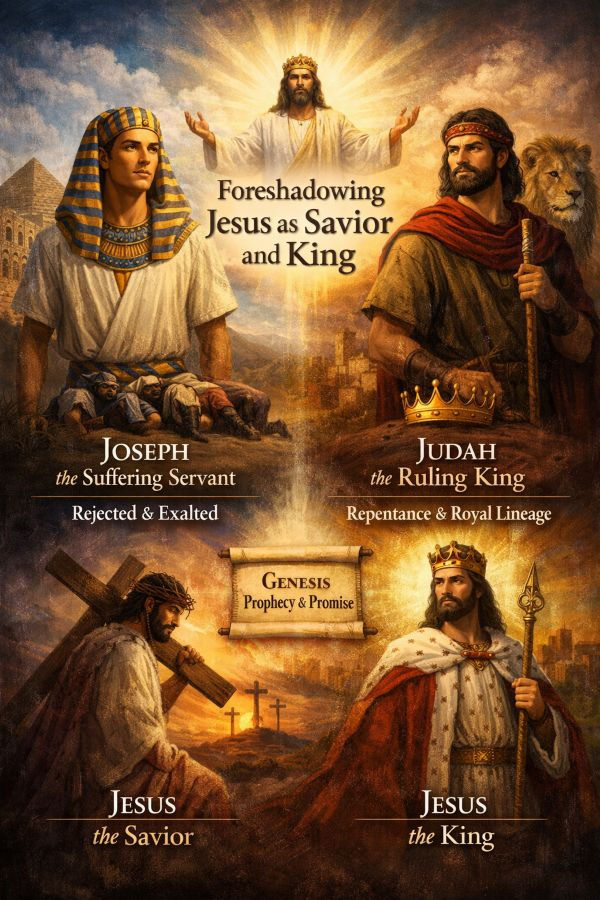
Jesus is not merely the One who affirmed Genesis. He is also the fulfillment toward which Genesis points. He is the promised offspring who crushes the serpent, the greater Noah who brings salvation through judgment, the true seed of Abraham through whom all nations are blessed, and the second Adam who restores what the first Adam lost.
If Genesis is removed, the gospel loses its beginning. But when we understand Genesis as Jesus and the apostles understood it, we see the entire Bible as one unfolding story of God's redemption through Christ.



Comments